Heating and Cooling Without a Drop of Water: Is Peltier Technology the Gamechanger for All-Electric Buildings?
The Zero-Hydraulic Building: A Vision Getting Closer
Imagine a commercial building without heat pump outdoor units, without kilometers of copper pipes, without buffer tanks, without antifreeze, without hydraulic balancing. No installer calling at 11 PM in winter because the circulation pump has failed.
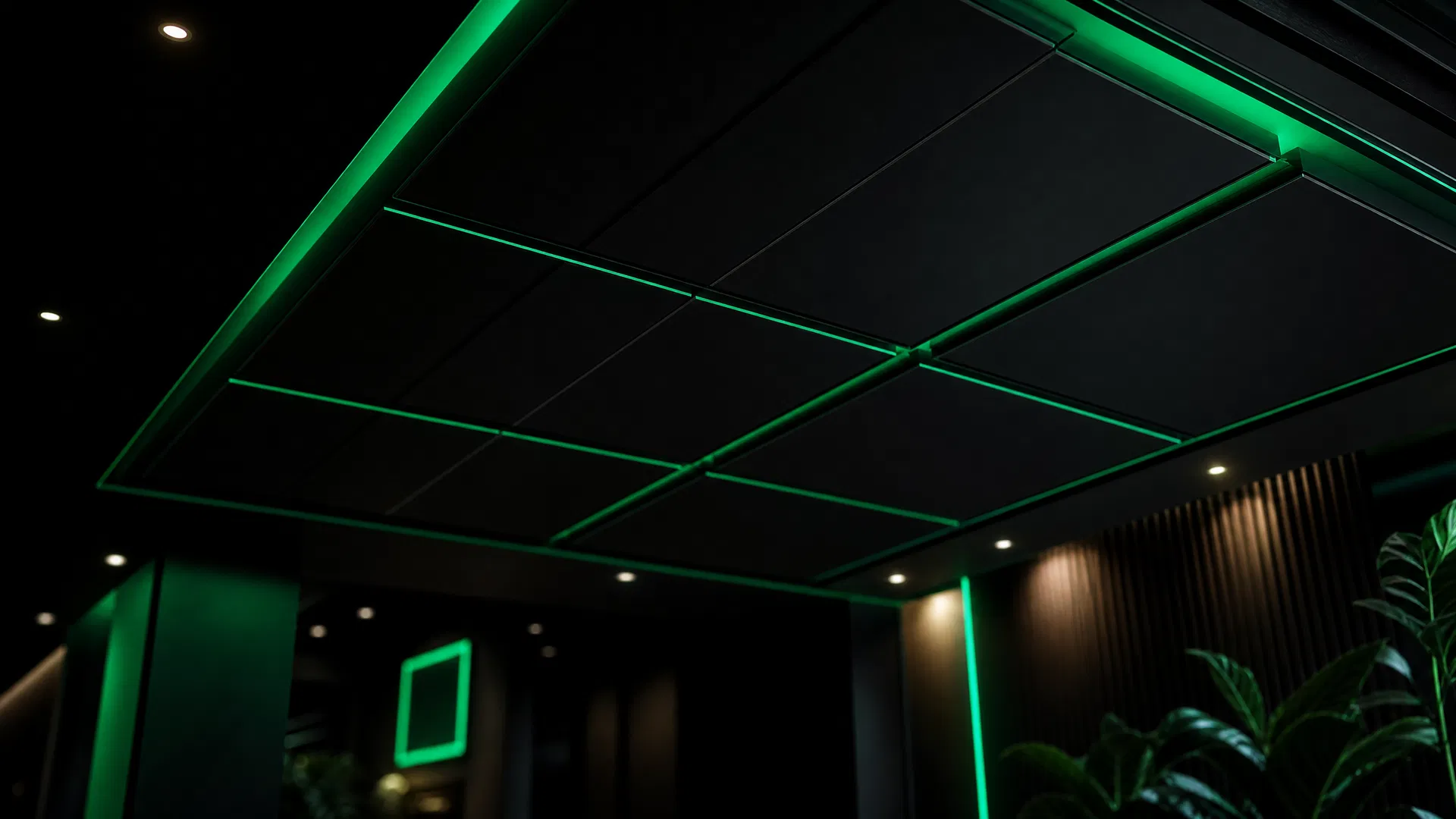
Instead: Flat panels on the ceiling. Power in - one side gets cold, the other warm. Reverse polarity - the effect flips. Heating and cooling with one component, no moving parts, no liquid, no refrigerant.
This is not science fiction. This is the Peltier effect - known since 1834, industrially used in electronics cooling for decades. What is new: The first manufacturers are scaling this technology to building surfaces.
Why This Interests Me as an Entrepreneur
I think in systems. Electricity, heat, mobility and processes must be considered together. And when I look at a typical all-electric building, I see: PV on the roof, battery storage in the basement, charging infrastructure at the door - all electric, all clean. And then? Then there is a heat pump with outdoor unit, refrigerant circuit, hydraulic distribution, buffer tank and control technology.
That is the last hydraulic foreign body in the electric system.
The question is not whether, but when we will electrify this building block too - without the detour via water.
The Business Case: The Honest C-Level View
Now it gets concrete. Because visions are nice, but decisions are made based on numbers.
CAPEX - What We Save, What We Invest
For a typical commercial building (500 m2 usable area), the calculation looks like this:
Savings from eliminating hydraulics:
- Heat pump (outdoor + indoor unit): approx. EUR 22,000
- Hydraulic distribution (pipes, pumps, valves, buffer): approx. EUR 18,000
- Total savings: approx. EUR 40,000
Additional costs for Peltier panels:
- Thermoelectric ceiling panels: approx. EUR 280/m2 (vs. EUR 150/m2 for water-based cooling ceilings)
- For 300 m2 active ceiling area: approx. EUR 84,000 (vs. EUR 45,000 conventional)
- Additional cost: approx. EUR 39,000
Bottom line: CAPEX-neutral to slightly more expensive. But - and this is crucial - with massively reduced complexity and significantly lower maintenance costs.
OPEX - The COP Issue and Why It Is Not Decisive
Here is where most engineers wave it off: The COP (Coefficient of Performance) of a Peltier element is about 0.6 for cooling. A heat pump achieves 4.0.
Sounds devastating. But it is not - if you think the system through to the end.
The decisive question is not: How efficient is the device? But: What does a kWh cost me at this location at this time?
In summer, when cooling is needed, we have massive PV surplus on a typical commercial roof. Electricity that would otherwise be fed in at 7-8 ct/kWh - or even curtailed. The opportunity costs are 3 ct/kWh.
At 3 ct/kWh electricity costs and COP 0.6, cooling costs me 5 ct/kWh thermal. That is economically perfectly viable - without any subsidies.
For heating, it looks better: COP 1.5 to 2.5 - significantly above pure infrared heating (COP 1.0) and also economically viable in combination with PV self-consumption.
The Bottleneck: Raw Materials and ESG Reality
I need to be honest here - that is part of my style: Peltier panels are based on bismuth telluride (Bi2Te3). Tellurium is a critical raw material:
- Heavily dependent on China (over 80% of world production)
- By-product of copper and lead smelting - not infinitely scalable
- No problem for pilot projects, currently a bottleneck for mass market
Anyone serious about ESG must keep this supply chain in view. But: Research is working on alternative thermoelectric materials. Things are moving.
My Assessment: When Does What Make Sense?
Building today? Reversible heat pump + surface system (ceiling or floor) remains the most economical solution for most locations. Proven, financeable, scalable.
Thinking innovatively? Those with massive PV systems (over 100 kWp), those cooling server rooms or data centers, those planning modular extensions, or those seeking maintenance-free operation over 20 years - should have Peltier on their radar for pilot projects.
In 5 years? If panel costs drop to EUR 180/m2 and alternative materials become available, solid-state HVAC will be a serious competitor. The system simplification is too significant to ignore.
What This Means for Your Location
REVOLUTION E orchestrates exactly these kinds of pilot approaches: We evaluate new technologies not by hype, but by TCO over 20 years. We connect PV, storage, charging infrastructure and heating/cooling into an economically optimized total system - manufacturer-independent.
Want to know what your location can do - before you invest?
The All-Electric QuickCheck analyzes your location across 4 sectors: electricity, heat, mobility and process heat. Data-driven, in just a few minutes. With reliable numbers for your management team.
Transformation starts with knowledge.
Receive regular analyses, insights and decision-making frameworks on energy, industry and strategic development.
No spam. Unsubscribe anytime. Your data is processed according to our privacy policy.
Connect with Frank Hummel on LinkedIn
For latest insights on energy, electrification and innovation