Gebäudetyp E in Housing: Building Simpler Is a Leadership Decision
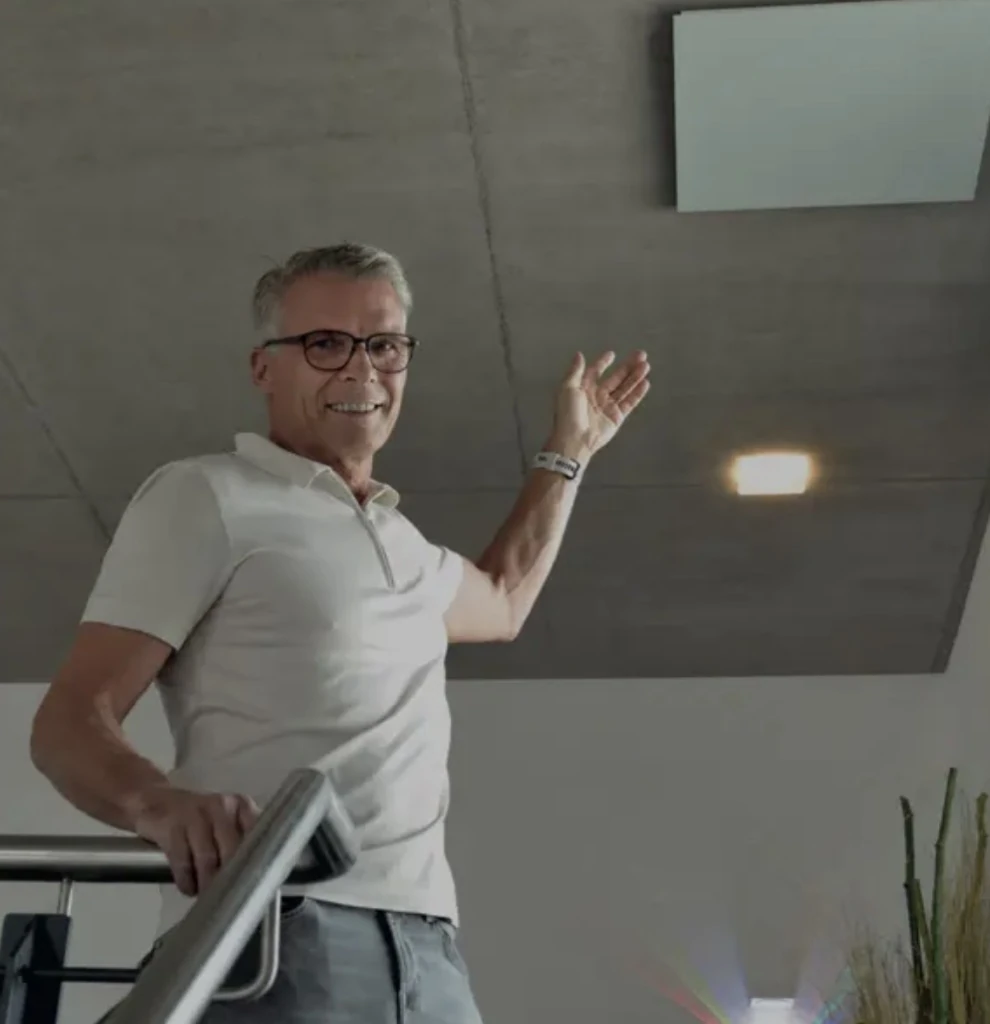
Frank Hummel at the HSG Innovation HUB – not a Gebäudetyp-E housing project.
Homes are not built for the handover ceremony. They need to work for decades – for the people living in them and for the owners responsible for running them. Yet the discussion around Germany's Gebäudetyp E often starts with what can be removed: Which feature, standard or trade can we cut?
I believe that is the wrong order. Gebäudetyp E in residential construction is not a cost-cutting exercise. It is a leadership decision about value, cost and responsibility.
Agree on the objective before drawing up a cut list
The E refers to simpler, needs-based construction. It is neither a fixed building specification nor an energy-efficiency class. The approach is intended to allow project parties to dispense with non-essential standards and agree the scope of work more deliberately. Germany's federal government has published key points for a proposed Gebäudetyp E construction contract. Its civil-law framework remains a legislative project, not a blanket licence to disregard existing requirements today.1
For a residential investor, this means discussing intended use, target rents, comfort, maintenance, adaptability and responsibilities before looking for the first saving. What is truly required? Which features create lifetime cost without corresponding value? And where will an apparently inexpensive omission come back to haunt the operator?
Building more simply does not mean planning less. It means making the right decisions earlier.
Model OPEX before locking in CAPEX – and calculate both
In development projects, the lowest initial cost often wins. It is immediately visible in the budget. The consequences unfold over years: energy purchases, maintenance, technical support, replacements, potential retrofits and downtime when systems fail.
I would therefore model running costs and long-term usability before committing to a construction concept – not to ignore the initial investment, but to evaluate it properly. A residential building needs a credible life-cycle business case. What matters is more than euros per square metre at handover: energy and service costs, reserves, financing, the tenant's perspective and the allocation of risk all belong in the decision.
A low CAPEX figure can prove expensive if important infrastructure later has to be retrofitted. Conversely, additional technology cannot be justified by good intentions alone. Every component should prove its value within the overall system.
Energy architecture cannot be left until later
In residential buildings, the envelope, shading, space heating, hot water, ventilation, household power and mobility affect one another. Optimise every trade in isolation and you may simply create more interfaces and more operating costs.
Photovoltaics can increase the share of electricity used on site. Storage can shift loads and, depending on tariffs and actual use, perform further economic functions. Energy management can coordinate generation and flexible demand. Charging infrastructure needs forward-looking electrical planning. But none of these investments is automatically economical – and no battery replaces proper grid-connection and electrical-safety planning.
Nor is “simpler is better” a universal rule for ventilation. Whether opening windows is sufficient or a mechanical solution is needed depends on the actual building, occupancy, moisture control, acoustics, air quality and design. The same applies to heating: assess heat demand, hot water, electricity prices, investment, maintenance and residents' requirements – not a favourite product.
Electrical infrastructure, in particular, should not become an arbitrary cut. Germany's DKE explicitly warns against confusing safety-critical electrical standards and future readiness with mere comfort features.2 Missing cable routes, distribution capacity or allowances for future demand can be expensive to add later.
Simplicity requires clear contracts and clear roles
Safety, structural integrity, fire protection, health and applicable public-law requirements are not optional. Contractual quality and the interests of future tenants must also be addressed properly. Germany's Federal Ministry for Housing presents Gebäudetyp E as a way to challenge non-essential standards deliberately, not as a predetermined technical kit.1
That leaves management and development teams with four questions:
- What is the objective? What standard of living and operational performance must be maintained over time?
- What can go? Which equipment or comfort features can genuinely be omitted without compromising safety, fitness for use or future flexibility?
- What must remain? Where do robust construction, electrical infrastructure and retrofit options matter more than a smaller initial order?
- Who is accountable? Who agrees deviations, records assumptions, validates specialist designs and runs the building afterwards?
For Gebäudetyp E, value is not determined by how long the cut list is. It depends on whether the developer, owner, design team, financiers and operator are working towards the same objective.
My view as an entrepreneurial sparring partner
I support the ambition to simplify residential construction. But I would not open a boardroom discussion with “build it cheaper”. I would start somewhere else:
What kind of housing can we commit to today that will remain safe, affordable and economical to operate tomorrow?
This calls for neither maximum technology nor a minimum specification at any price. It calls for a transparent decision on function, CAPEX, OPEX, energy, risk and accountability. Technology should serve the objective – and responsibility should not end at handover.
That is what my entrepreneurial SPARRING is about: getting the difficult questions on the table before capital is committed, building a defensible decision framework and staying involved through implementation.
References
- 1.German Federal Ministry for Housing: Gebäudetyp E – policy outline and legislative process
- 2.DKE/VDE: Gebäudetyp E – simplify construction without compromising safety or future readiness
Legal status checked on 2 October 2026. Gebäudetyp E is a design and contractual approach, not a stand-alone energy standard. The economic case for PV, storage, heating, ventilation or charging must be assessed for the specific project using actual offers, load profiles and requirements.
Transformation starts with knowledge.
Receive regular analyses, insights and decision-making frameworks on energy, industry and strategic development.
Connect with Frank Hummel on LinkedIn
For latest insights on energy, electrification and innovation