Energy QuickCheck: Your Savings Potential in 5 Minutes — Electricity, Heating, Process Heat, Mobility
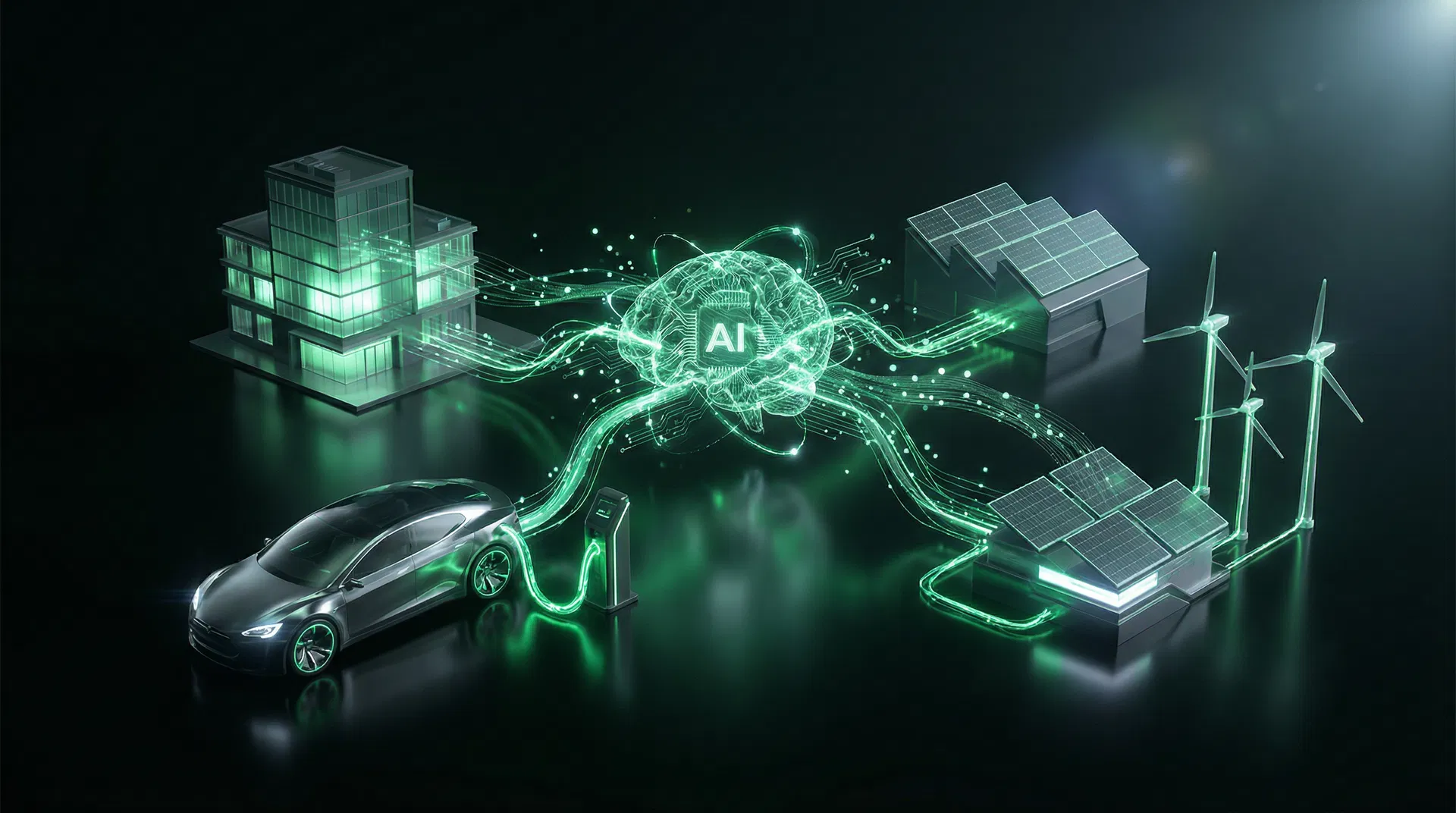
Energy costs are the second-largest cost block in mid-sized manufacturing — and the only one you can structurally reduce within 12 months. The Energy QuickCheck by HUMMEL Service Group delivers a initial orientation in just minutes: How much do you save when you think of electricity, heating, process heat, and mobility as one system?
Why a QuickCheck — and Why Now?
Most business owners know they need to act on energy. What's missing isn't motivation — it's a reliable number. That's exactly where the QuickCheck comes in: eleven industry model cases, four sectors, one result. No consulting session, no on-site visit, no obligation.
The QuickCheck is based on the calculation logic of the FHC Sector Configurator — a platform that is unique in the market. No other tool combines electricity, heating, process heat, and mobility in an integrated analysis with instant results and a professional report.
What Gets Calculated?
Electricity: PV Self-Consumption, PPA, and Load Optimization
The QuickCheck evaluates what share of your electricity demand can be covered by on-site PV generation and PPA contracts (Power Purchase Agreements). For a typical manufacturing company with 500,000 kWh annual consumption, savings of 15–25% compared to pure grid supply are common.
Additionally, the calculation factors in load optimization and peak shaving — the targeted reduction of load peaks that drive your grid charges. Combined with battery storage, peak loads can be reduced by 20–30%, which directly impacts your electricity bill.
Heating: Heat Pump Instead of Gas — and Why the COP Matters
Gas and oil heating systems are replaced by heat pumps with a COP of 3.5. This means: one kilowatt-hour of electricity produces 3.5 kilowatt-hours of useful heat. At a gas price of 8 ct/kWh and a heat pump electricity price of 20 ct/kWh, the resulting heat cost is just 5.7 ct/kWh — a reduction of nearly 30%.
The key to profitability is the combination with PV self-consumption: when the heat pump preferentially runs on self-generated electricity, the effective heat cost drops even further.
Process Heat: The Underestimated Lever in Manufacturing
For many industrial companies, process heat is the single largest item in the energy balance — often 40–60% of total energy consumption. The QuickCheck accounts for this sector through the heat demand input and shows the savings potential from switching to high-temperature heat pumps (up to 120°C), infrared heating for hall climate control, or hybrid systems (heat pump + peak-load gas).
An example: A metalworking company with 400,000 kWh of process heat per year at a gas price of 9 ct/kWh currently pays approximately €36,000 annually. With an industrial heat pump (COP 3.0) and partial PV supply, costs drop to approximately €22,000 — savings of over €14,000 per year, with a simultaneous CO₂ reduction of approximately 60 tons.
Mobility: Electrify Your Fleet, Monetize the GHG Quota
Car fleets are converted to EVs (20 kWh/100 km), trucks to electric drives (120 kWh/100 km). Beyond lower energy costs per kilometer, the GHG quota (greenhouse gas reduction quota) is also factored in, which can generate additional revenue of up to €300/vehicle/year.
The decisive advantage: when your e-fleet charges at your own PV charging infrastructure, charging costs drop to 8–12 ct/kWh instead of 35–50 ct/kWh at public stations. This halves the Total Cost of Ownership (TCO) of your fleet.
Additional Measures Covered by the Sector Configurator
The QuickCheck is the entry point. The full Sector Configurator goes significantly deeper and models additional measures that are critical for overall profitability:
| Measure | Impact | Typical Savings Potential |
|---|---|---|
| Battery Storage | Peak shaving, self-consumption optimization | 10–20% of electricity costs |
| Load Management (EMS) | Automatic load shifting, tariff optimization | 5–15% of grid charges |
| Bidirectional Charging (V2G) | Vehicle batteries as buffer storage | Additional revenue €200–500/vehicle/yr |
| Infrared Heating | Hall heating without central system | 30–50% vs. gas heating |
| Energy Flat-Rate Living | Fixed energy costs for tenants, returns for investors | Rent premium €1.50–2.50/m² |
| CO₂ Accounting | Monetary valuation of savings (EU ETS) | €55–85/t CO₂ |
CO₂ Balance: From Compliance to Competitive Advantage
Each sector is evaluated individually, with CO₂ savings expressed in tons per year. At a CO₂ price of €55/t (current EU ETS reference value, trending toward €85+/t by 2027), savings are also presented in monetary terms.
For a mid-sized company with 500,000 kWh electricity, 200,000 kWh heat, and a fleet of 50,000 km/year, typical CO₂ reduction ranges from 80–150 tons per year. This corresponds to a monetary value of €4,400–12,750 — and rising.
But the real value isn't in the CO₂ tax: companies with demonstrably low carbon footprints win tenders, meet ESG requirements from banks and investors, and position themselves as preferred suppliers in regulated supply chains.
Why This Platform Is Unique
The FHC Sector Configurator is the only platform on the market that connects all three energy sectors — electricity, heating, and mobility — in an integrated calculation. Other tools look at PV in isolation, heat pumps in isolation, or e-mobility in isolation. But the greatest savings arise precisely at the interfaces: when PV electricity powers the heat pump, when vehicle batteries serve as storage, when load management orchestrates all consumers.
What additionally sets the configurator apart:
Instant results. No consulting call, no proposal, no waiting. You enter your data and receive a initial orientation in minutes.
Professional results report. The full Sector Configurator generates a print-ready report as a Word document — suitable for management, supervisory boards, or investor meetings.
All parameters editable. Every assumption is transparent and adjustable. You can enter your own electricity prices, gas prices, vehicle data, and investment costs.
Independent and vendor-neutral. No product advertising, no vendor lock-in. The platform recommends measures, not brands.
"Most entrepreneurs know they need to act. What they lack is a reliable number. That's exactly what the QuickCheck delivers — in five minutes, with no obligation."
— Frank Hummel, Founder of HUMMEL Service Group
From QuickCheck to Implementation
The QuickCheck is the first step in the REVOLUTION E process. Following the initial assessment, a detailed analysis with the full Sector Configurator is available on request, making all parameters editable and generating a professional results report as a Word document.
The typical path for decision-makers:
Step 1 — QuickCheck (5 minutes). Select an industry model case and explore possible savings and CO₂-reduction ranges. Free, no registration required.
Step 2 — Sector Configurator (30 minutes). Adjust all parameters, configure measures, generate professional report. Ideal as a decision-making document.
Step 3 — Sparring with Frank Hummel. Discuss results, develop implementation strategy, activate partner network. 30 years of experience, entrepreneur-to-entrepreneur.
→ Learn More About REVOLUTION E
Current product scope (15 October 2026): The All-Electric QuickCheck uses 11 industry model cases, industry benchmarks and sample assumptions. It provides free initial orientation across electricity, heating, process heat and mobility, without an on-site appointment or individual result guarantee. The examples and figures in this article are model illustrations, not verified savings for your business. An individual decision basis follows with the All-Electric Standortanalyse. Explore the REVOLUTION E product stages.
Transformation starts with knowledge.
Receive regular analyses, insights and decision-making frameworks on energy, industry and strategic development.
Connect with Frank Hummel on LinkedIn
For latest insights on energy, electrification and innovation