A Sense of Possibility Needs a Sense of Reality
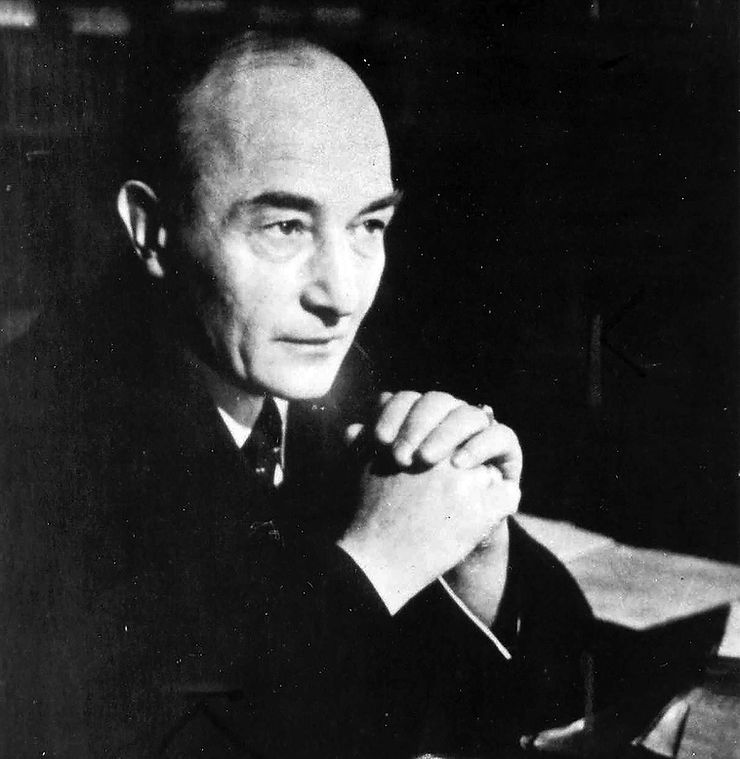
I read Robert Musil's The Man Without Qualities and was struck by how contemporary it feels.
Not because Musil predicted today's energy or transformation debate. What he captured was a pattern that business leaders still recognise: organisations can generate enormous amounts of thought, discussion and activity while losing the connection between ideas, reality, accountability and decisions.
An important historical distinction
The novel opens in August 1913, immediately before the First World War. Its “Parallel Campaign” is intended to prepare a major Austrian imperial jubilee for 1918. In retrospect, the absurdity is unmistakable: while committees search for a grand unifying idea, Europe is moving towards war.1
Musil did not simply “say this before the First World War”. He served as an officer from 1914 to 1917. Early versions of the novel emerged from 1918 onwards; in 1924 it became his main literary project. The first volume was published in 1930.123
The story looks back at the world before 1914. The novel was written with the knowledge of what happened next.
This distinction does not weaken the novel's relevance. It explains the force of its analysis.
The Parallel Campaign: plenty of activity, little decision
The Parallel Campaign brings together influence, intellect and grand ambition. It produces meetings, programmes, terminology and responsibilities. What it does not produce is a viable direction.
Musil does not offer a slogan for contemporary elite criticism. His observation is more concrete: organisations can be highly active yet still fail to make decisions. The greater the ambition, the more important reality, accountability and follow-through become.
That is where I see the book's relevance today.
A sense of reality and a sense of possibility
Musil places a sense of possibility alongside a sense of reality:
“If there is a sense of reality, there must also be a sense of possibility.”4
My translation from the German original.
For Musil, a sense of possibility does not mean ignoring facts. It is the ability to imagine that the present arrangement is not the only one available. The text does not set possibility against reality; it also shows how ideas can become impractical when they lose contact with reality.
Business decisions therefore require both:
- a sense of possibility to develop a better target state
- a sense of reality to respect data, technology, capital and organisational capacity
Vision without reality remains a concept. Reality without possibility merely manages the status quo.
What this has to do with transformation
Musil did not write about all-electric buildings, photovoltaics, storage or charging infrastructure. Applying his ideas to energy and transformation is my interpretation.
But the pattern is familiar. Companies define climate targets, digital strategies and investment programmes. Working groups, presentations and isolated projects follow. What is often missing is an integrated basis for decision-making:
- How do electricity, heat, process heat and mobility interact?
- Which option is technically robust?
- Which assumptions carry the business case?
- How do CAPEX, OPEX, TCO, NPV, IRR and DSCR affect the decision?
- Who takes responsibility for the pilot, implementation and scale-up?
Energy does not respond to narratives. Grid capacity, load profiles, investment and operating costs cannot be moderated away. Yet transformation will not emerge by simply extending the status quo either.
The entrepreneurial task is to connect a better possible future with the measurable reality of the site.
Why this fits my work
For me, SPARRING is not about producing another presentation. It is about working through a decision until it is robust.
That includes productive tension:
- testing an attractive idea against facts and constraints
- challenging assumptions that appear certain
- connecting technical potential with economic viability
- making responsibilities and next steps explicit
I bring more than 30 years of first-hand experience in building, scaling, transforming and selling a company. I read Musil not as a literary scholar, but as an entrepreneur who finds something highly practical in the tension between possibility and reality.
My personal conclusion
The book impressed me because it shows how easily intelligent people in intelligent systems can lose direction.
My entrepreneurial conclusion is:
A sense of possibility opens the path. A sense of reality makes it robust. Responsibility turns it into execution.
That is precisely the point at which I work with managing directors, entrepreneurs and leadership teams: when there are many options on the table, but the decision must become clear, commercially sound and executable.
References
- 1.Walter Fanta: The Man without Qualities, 1914-1918-online – setting, genesis and Parallel Campaign
- 2.Encyclopaedia Britannica: Robert Musil – biography and chronology of the novel
- 3.Deutschlandfunk: Publication of The Man Without Qualities
- 4.Austrian National Library / Musil Online: sense of reality and sense of possibility
Transformation starts with knowledge.
Receive regular analyses, insights and decision-making frameworks on energy, industry and strategic development.
No spam. Unsubscribe anytime. Your data is processed according to our privacy policy.
Connect with Frank Hummel on LinkedIn
For latest insights on energy, electrification and innovation