From Cost Center to Energy Hub: The HUMMEL Innovation HUB Journey
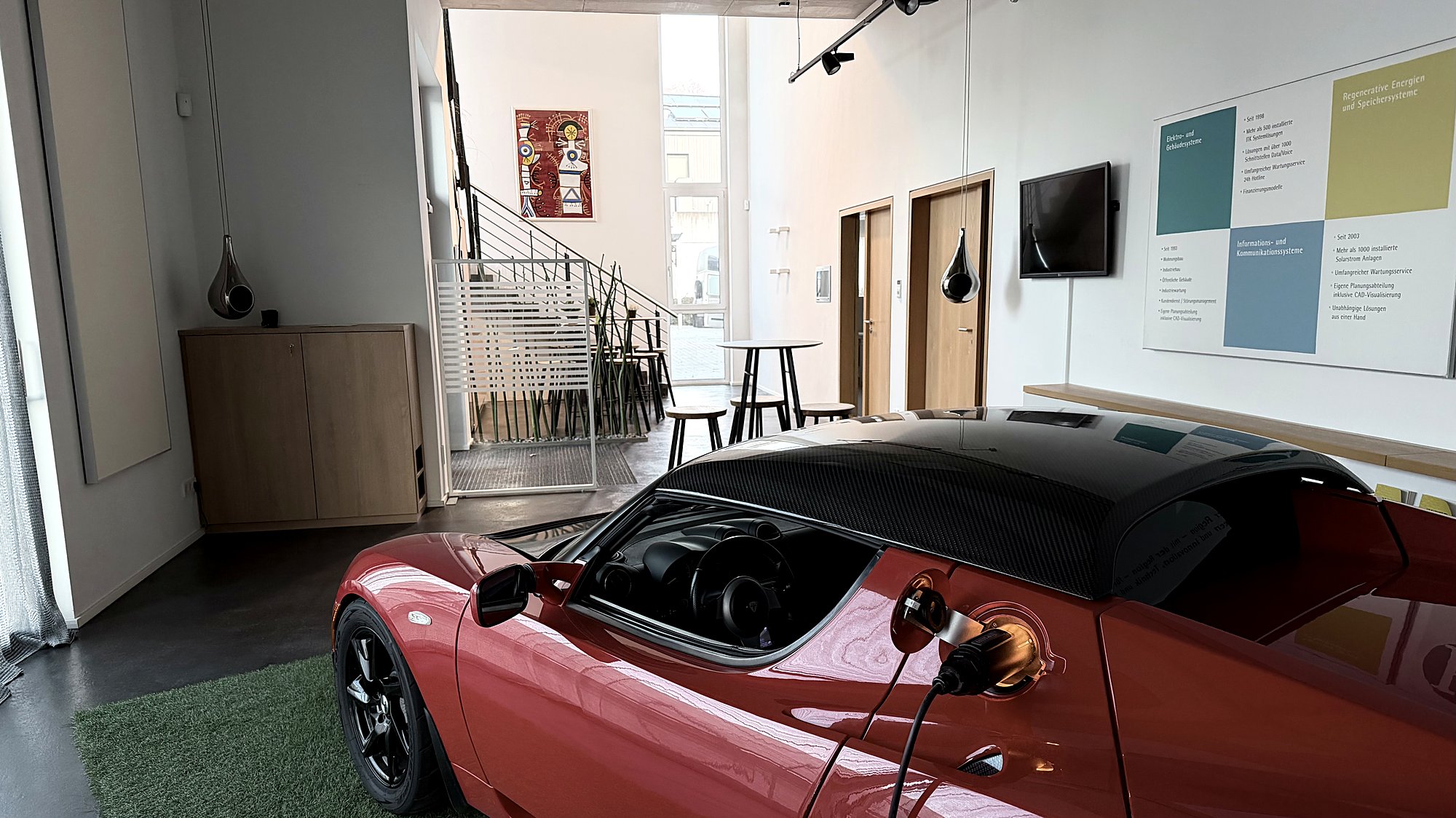
Those who credibly exemplify transformation convince faster. In 2012, I implemented in my company building what I recommend today in the Quick-Check: create data, orchestrate technology, and align investments with profitability. Result: The location is evolving from a "consumption point" to an energy hub – with photovoltaics, intelligent ventilation/heating, and charging infrastructure as components of a system that pays off.
Video: Review & Learnings
Infrared heating meets the high expectations of entrepreneur and energy architect Frank Hummel – insights into the planning, execution, and operational advantages of the IR solution in my building.
Important note: I sold the former HUMMEL Systemhaus. Today, my activities are conducted through HSG GmbH & Co. KG (holding company). Operationally, I support companies manufacturer-independently with Frank-Hummel-Consulting (FHC) and REVOLUTION-E – from the Quick-Check to implementation with selected partners.
Project Profile
| Feature | Details |
|---|---|
| Building Type | Company building (new construction) |
| Year of Construction / Standard | 2012 / Non-residential building according to §§ 16 ff. EnEV (2012) |
| Construction Method | Solid construction |
| Area | approx. 920 m², of which 400 m² heated office space |
| Standard Heating Load | 30 kW |
| Ventilation | Decentralized units (BluMartin) |
| PV System | 70 kWp |
| Battery Storage (planned) | approx. 200 kW for load management |
| Charging Infrastructure | 8 AC available, 2 DC planned |
Technology & Systems in Detail
- Office Heating: Infrared heaters (22× VH06262 at 810 W)
- Restrooms: IR (2× VH03535 at 260 W, 2× VH-I04848 at 480 W)
- Warehouse: Infrared dark radiators (6× VC-A1800 at 1,800 W)
- Hot Water: Hot water tank
- Ventilation: Decentralized units (BluMartin)
- Generation: Photovoltaics 70 kWp
- Battery Storage (planned): approx. 200 kW for load management
- Charging Infrastructure: 8 AC available, 2 DC planned
What the Video Shows – and Why It's Still Relevant Today
- Fast Controllability & Zoning: demand-driven instead of continuous heating
- Low Maintenance & Robust: no hydraulics, low service costs over the years
- Comfort & Air Quality: stable indoor climate with decentralized ventilation (heat recovery)
- Synergy with PV: 70 kWp self-generated power, fast reaction to PV peaks
- Scalable in Existing Buildings: control, metering concept, storage, and DC charging in stages
Why This System Architecture?
1. IR in Offices – high reaction speed, zone control, very low maintenance.
2. Decentralized Ventilation – good air quality + heat recovery without complex duct networks.
3. PV as a Cash Lever – prioritize self-consumption; further optimize with storage and charging points.
4. AC/DC Charging – attractive for team, customers, and fleet; ideal for PV-driven charging.
5. Storage & Load Management – peak shaving (reducing power costs), shifting charging processes, utilizing PV surpluses.
Operational Insights (Summary)
- Measurement & Metering Concept First: No reliable decisions without data
- Orchestration Beats Individual Components: Control links heating/ventilation, PV, storage, charging
- Reduced Maintenance Costs: IR + decentralized ventilation offer cost advantages over years
- Roadmap Instead of Big Bang: In stages – Data → Quick Wins → Control → Storage → DC
The Shift to the INNOVATION HUB
From lived practice, the next step is logical: We are expanding the location into an INNOVATION HUB – a showcase & testbed for economic electrification.
What Visitors Experience
- Live Data & Dashboards: Load profiles, PV, charging, possibly storage
- Charging Infrastructure: 8× AC in operation, 2× DC planned – demonstrating peak shaving, PV shift, and load management
- Technology Islands ("Demo-Pods"): IR heating surfaces, decentralized ventilation, measurement/metering concepts, controller logic
- Use Cases: Office, warehouse/logistics, customer zone – including billing, user journey, operation/service
How We Transfer This to Your Location – with the All-Electric QuickCheck
In the Quick-Check, we analyze your data and translate it into a concrete 90-day roadmap:
- Load profiles, metering structure, grid connection/power costs
- PV potential, self-consumption, surplus strategies
- Heating/ventilation: efficiency, control, usage profiles
- Charging infrastructure: AC/DC mix, billing, scalability
- Load management & storage: peak shaving, PV shift, charging routes
- Funding/regulation (including metering concept, grid fees, §14a options)
- Profitability: Invest, Opex, ROI/ROCI, cash flow scenarios
Result of the Quick-Check
- Short report with figures, risks, opportunities
- 90-day plan (quick wins & priorities)
- Investment & benefit overview – "What does it bring in €?"
For over 30 years, I have been an entrepreneur and support leadership teams as a business partner for transformation – manufacturer-independent, fact-based, and economical.
Editorial update (15 October 2026): The technical figures and planned expansions above describe the historical project stage. For the current configuration of HSG's own site, see the Innovation HUB case study. Today, the All-Electric QuickCheck is a benchmark-based orientation; an individual site analysis and implementation pilot are separate product stages.
Transformation starts with knowledge.
Receive regular analyses, insights and decision-making frameworks on energy, industry and strategic development.
No spam. Unsubscribe anytime. Your data is processed according to our privacy policy.
Connect with Frank Hummel on LinkedIn
For latest insights on energy, electrification and innovation