Energy, PV, & E-Mobility 2026: Business Impact of the Annual Report
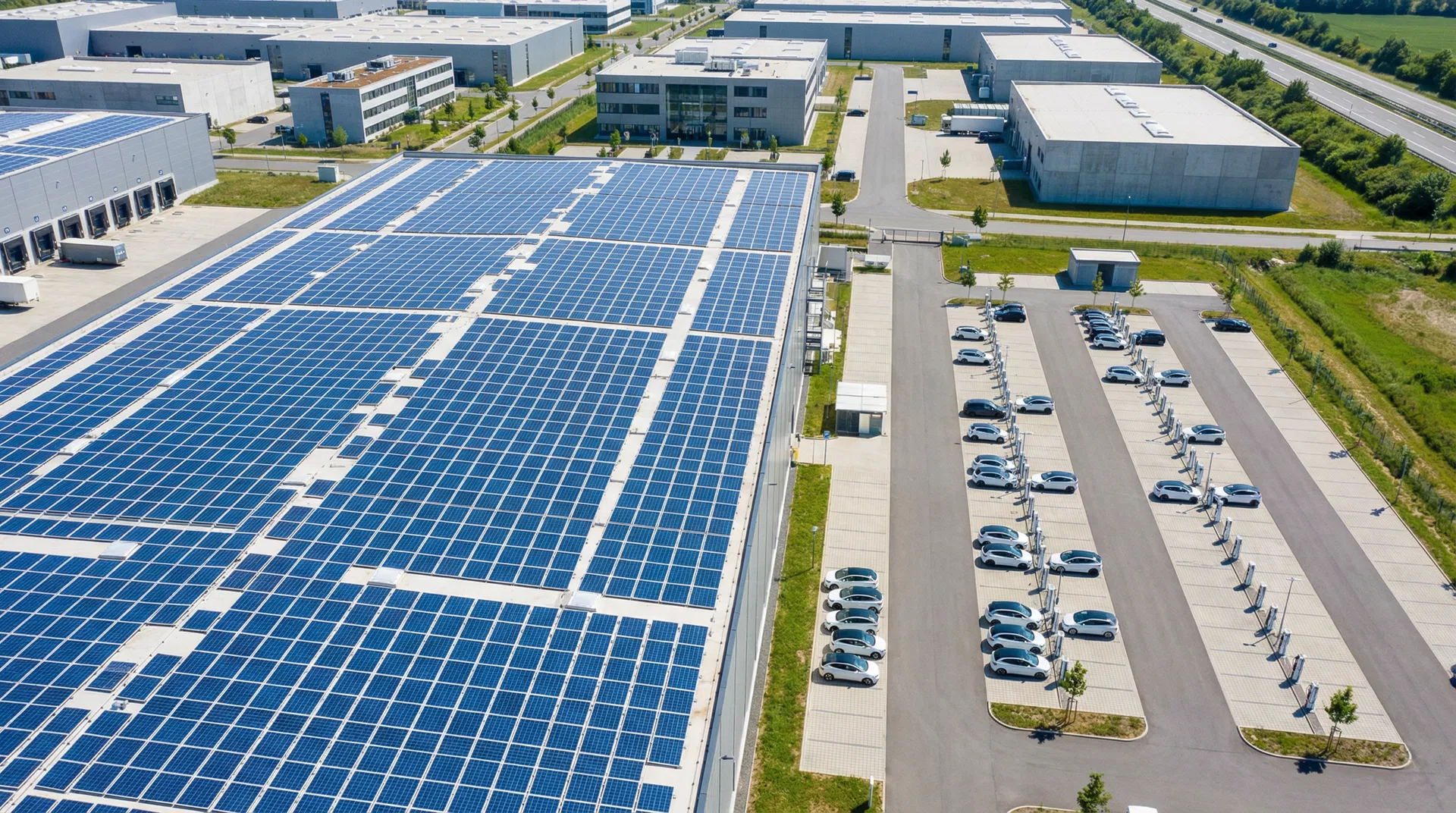
The Energy Transition as an Economic Realignment
The German government's 2026 Annual Economic Report marks a turning point in German energy policy. Instead of ideological debates, a pragmatic, economic perspective is coming to the fore. The energy transition is no longer understood as a collection of individual measures, but as the creation of a systemic, market-integrated energy system.
For entrepreneurs, this means: energy has definitively become a central production factor, and its management determines competitiveness.
Energy as a Factor of Production – on Par with Capital and Labor
The official recognition of energy as a factor of production is more than semantics. Energy costs in Germany remain high compared to international standards – despite falling wholesale prices. The political response: targeted efficiency improvements instead of subsidization at any cost.
Concrete measures:
- 6.5 billion Euros in government subsidies to reduce grid fees in 2026
- Continuation of electricity tax relief for the manufacturing industry
- Focus on plannable, efficient, and system-serving energy supply
Photovoltaics: From Individual Project to System Component
Expansion is progressing with impressive figures:
| Key Figure | Value |
|---|---|
| New additions 2025 | 16.5 GW |
| Total installed capacity | 117 GW |
| Share of renewables in gross electricity consumption | 58 % |
The focus is shifting from pure quantity to the quality of integration. What matters is no longer just how much capacity is installed, but how well it is integrated into the grid, how flexibly it can be used, and how much it relieves the markets. Storage, load management, smart meters, and dynamic tariffs are moving into the spotlight.
Storage and Flexibility as Necessary Infrastructure
A central leitmotif of the report: the flexibilization of the electricity system. Electricity storage – whether stationary in industrial plants, in buildings, or mobile in electric vehicles – is no longer considered optional accessories, but necessary infrastructure.
The message is clear: Those who offer flexibility will be rewarded. Those who stubbornly cling to the old system will bear the system costs. This is not a political threat, but the economic logic of a system dominated by renewable energies.
E-Mobility as Part of the Energy System
Particularly noteworthy is the shift in perspective: electromobility is no longer primarily seen as a CO₂ reduction instrument, but as an active component of the energy system. Electric vehicles function as mobile storage units, offer flexibility options, and can contribute to grid stability through bidirectional charging.
This is flanked by a new 3-billion-Euro funding program for private households and the removal of regulatory hurdles.
CO₂ Price as a Strategic Investment Signal
The further rising CO₂ price of around €65/t is positioned as a clear investment signal. Flanking measures such as the Carbon Border Adjustment Mechanism (CBAM) and the return of revenues are intended to cushion social hardship and secure the competitiveness of German industry.
Conclusion: Energy Competence is Leadership Competence
The energy transition has left the phase of moral debates behind. It has become a central management and leadership task. Companies that invest today in their own power generation, storage, and load management not only reduce costs – they gain entrepreneurial sovereignty.
The ability to understand and strategically utilize the complexity of the new energy system determines resilience, competitiveness, and future viability.
This article is based on an analysis by Frank Hummel, published on frank-hummel-consulting.de
Transformation starts with knowledge.
Receive regular analyses, insights and decision-making frameworks on energy, industry and strategic development.
No spam. Unsubscribe anytime. Your data is processed according to our privacy policy.
Connect with Frank Hummel on LinkedIn
For latest insights on energy, electrification and innovation